
Stretch Film Buyer’s Guide: Hand Stretch Film vs Machine Stretch Film
2026-06-05For many factories, warehouses, logistics centers, and packaging distributors, the question of hand stretch film vs machine stretch film usually comes up when pallet wrapping starts affecting daily efficiency. Loose cartons, torn film, uneven wrapping tension, and unstable pallets are not small details on a loading dock. They can lead to delayed shipments, product damage, extra labor, and higher packaging cost.
A useful stretch film buyer’s guide should go beyond basic definitions. Buyers need to know which pallet wrapping film fits their daily pallet volume, load weight, product shape, wrapping method, and storage or shipping conditions. The right stretch film does not simply cover goods. It holds the load together with the right balance of stretch, cling, puncture resistance, and cost per pallet.

What Is Stretch Film Used For?
Stretch film is a flexible plastic packaging film used to wrap cartons, bundled goods, and palletized products. In industrial packaging, it is commonly used for furniture parts, hardware products, home appliances, electronics, pipes, cables, building materials, logistics goods, and export shipments.
Its main job is load containment. During forklift handling, truck delivery, warehouse storage, or container loading, products must stay tight on the pallet. A good stretch film for pallet wrapping helps reduce carton movement, surface dust, light moisture exposure, and edge damage.
For purchasing teams, the important issue is not only the roll price. A low-priced roll may require more layers, break during wrapping, or fail to hold the pallet during transport. In real use, cost per pallet matters more than cost per roll.
Hand Stretch Film and Machine Stretch Film: The Main Difference
Hand stretch film is applied manually by workers, often with a handheld dispenser. It is suitable for lower-volume packaging, mixed pallet sizes, irregular goods, repair wrapping, and flexible warehouse work. Since no stretch wrapping machine is required, the starting cost is lower.
Machine stretch film is made for semi-automatic or automatic stretch wrapping machines. It is better for operations that wrap pallets repeatedly throughout the day. With proper machine settings, the film tension, overlap, and wrapping pattern remain more consistent than most manual wrapping.
In practical terms, hand stretch film is chosen for flexibility. Machine stretch film is chosen for speed, repeatability, and better control over film usage.
What Is Hand Stretch Film?
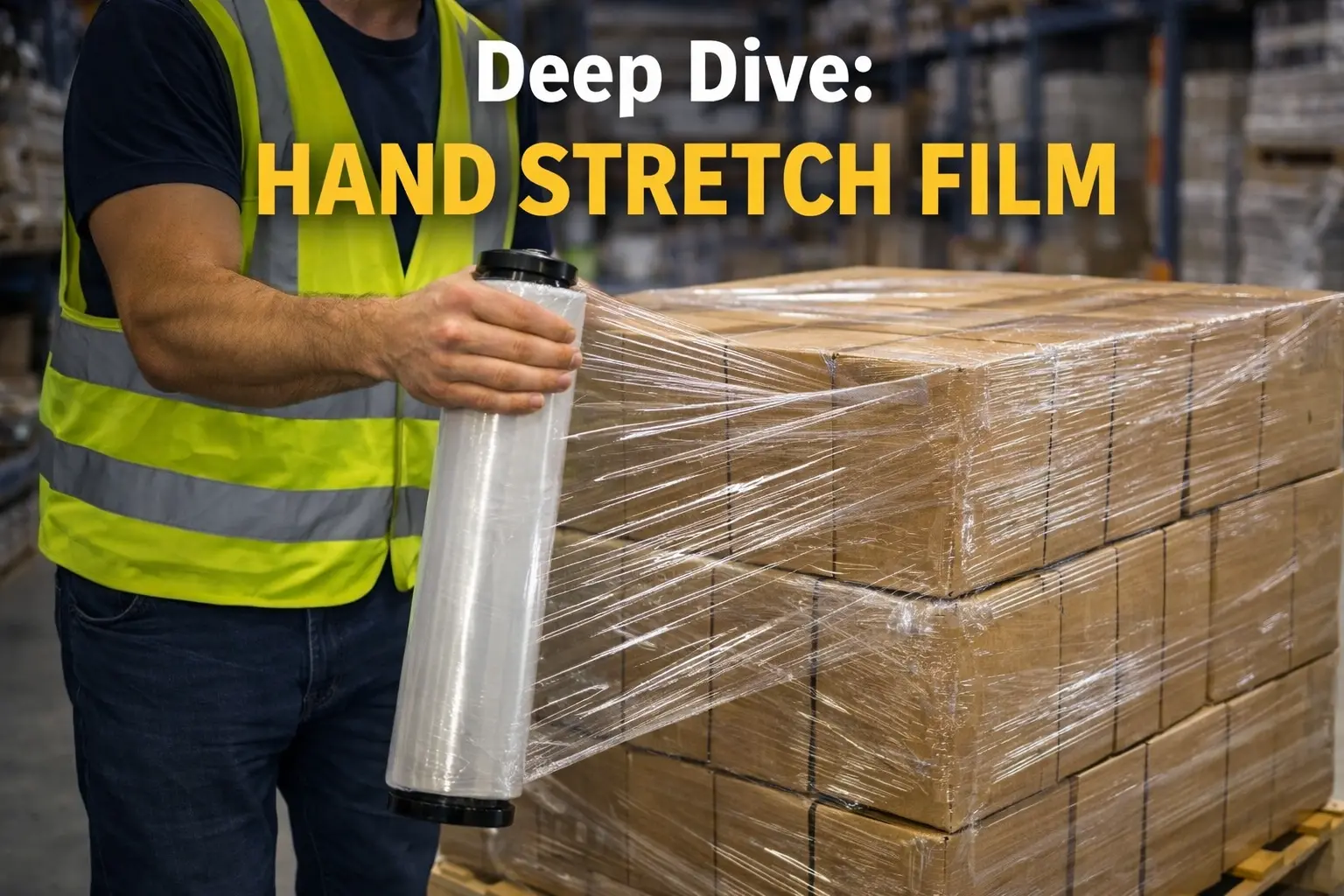
Hand stretch film, also called manual stretch film or hand grade stretch film, is designed for manual pallet wrapping. It is often used in small factories, warehouse packing areas, retail distribution centers, and logistics stations where order sizes change often.
This film works well when products are packed in different locations or when the load shape is not standard. For example, a hardware warehouse may wrap mixed cartons before local delivery. A furniture supplier may add extra layers around corners. A logistics team may use hand film for urgent pallets near the loading area.
Chuangyi hand stretch film is made from PE material. Standard listed specifications include 450mm and 500mm widths, 0.020mm to 0.030mm thickness, roll lengths of about 220m to 365m, and a 76mm core diameter. Custom specifications are also available for different packaging needs.
The main limitation is operator difference. If one worker wraps tightly and another applies less tension, pallet stability may not stay the same. For that reason, hand stretch film is usually better for low to medium packaging volume, irregular loads, and flexible packing tasks.
What Is Machine Stretch Film?
Machine stretch film, also known as machine grade stretch film, is used with wrapping equipment. The machine controls the rotation, film tension, overlap, and wrapping speed, which helps produce a cleaner and more stable pallet.
This type of pallet wrapping film is suitable for factories, logistics centers, export warehouses, and production lines that handle repeated shipments. It can reduce manual labor, lower wrapping variation, and improve load containment. For heavy cartons, appliances, hardware goods, and export pallets, consistent wrapping can also reduce the risk of shifting during transport.
Chuangyi machine stretch film is also made from PE material. Standard listed specifications include 500mm width, 0.020mm to 0.030mm thickness, 76mm core diameter, and roll lengths from about 1000m to 1525m. Custom options include widths from 100mm to 1400mm and thicknesses from 0.018mm to 0.050mm.
Longer rolls reduce roll-changing time during continuous operation. This is useful when the packaging line must keep pace with production, loading, or container shipment schedules.
How to Choose Stretch Film for Pallet Wrapping
The first factor is daily pallet volume. If only a few pallets are wrapped each day, hand stretch film is often practical. If workers spend hours wrapping pallets every shift, machine stretch film may bring better long-term value through faster wrapping and steadier results.
The second factor is load condition. Light cartons and smooth boxes usually need less film strength than heavy hardware, sharp-edged goods, tall pallets, or export shipments. When the load has corners, gaps, or uneven weight, puncture resistance and holding force become more important.
The third factor is specification. Stretch film thickness affects strength and tear resistance. Stretch wrap gauge is still used by many buyers when comparing film grades, while metric thickness is common in international sourcing. Width affects coverage. Roll length affects replacement frequency. Core diameter affects dispenser or machine compatibility.
Before bulk purchasing, sample testing should be done under real packaging conditions. The film should be checked on actual pallet size, actual product weight, and actual shipping requirements. A practical test should cover film breakage, slipping, cling, corner tearing, load stability, and film consumption per pallet.
Common Stretch Film Buying Mistakes
A common mistake is choosing stretch film only by roll price. A cheaper roll may look attractive on a quotation, but it may need more wraps to hold the same load. If it tears often or allows pallet movement, the real packaging cost becomes higher.
Another mistake is keeping hand stretch film as the main option after packaging volume has already increased. When workers spend too much time walking around pallets, or when wrapped loads look different from shift to shift, machine stretch film may be more suitable.
Wrong thickness selection also causes problems. Film that is too thin may tear on sharp corners or fail during transportation. Film that is too thick may raise material cost without adding useful protection. The right stretch film should match product weight, pallet height, edge condition, shipping distance, and wrapping method.
For machine wrapping, compatibility also matters. Machine stretch film should match the equipment’s tension setting, roll width, core diameter, and operating speed. If the film does not match the machine, breakage, poor stretch, and unstable wrapping may increase.
When Should a Business Switch to Machine Stretch Film?
A business should consider machine stretch film when manual wrapping starts slowing down daily packing work. Common signs include rising labor hours, uneven pallet appearance, frequent rewrapping, film waste, unstable loads, and repeated transport damage.
The decision should be based on total packaging cost, not only machine investment. Useful factors include pallets wrapped per day, labor time per pallet, film used per pallet, damage rate, and shipment consistency.
Many factories and warehouses still keep hand stretch film after adding machine wrapping. Standard pallets move through the wrapping machine, while irregular pallets, urgent loads, and touch-up work are handled manually. This mixed approach often gives better control across different packaging situations.
About Foshan Xinmingyi Packaging Materials Co., Ltd.
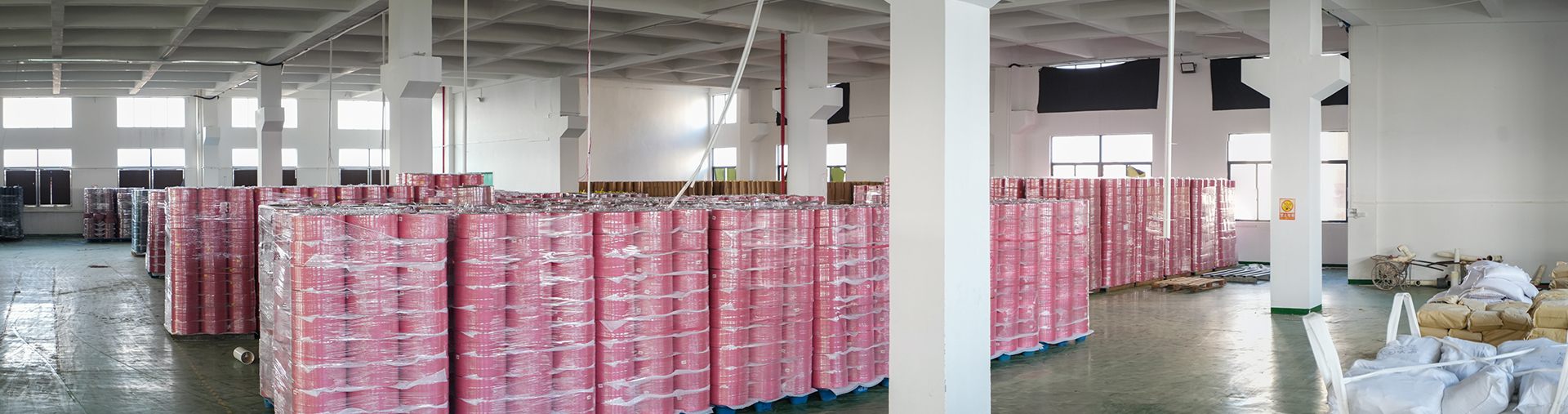
Foshan Weide Chuangyi Packaging Materials Co., Ltd. is a subsidiary of Foshan Xinmingyi Packaging Materials Co., Ltd. The company is located in Foshan, Guangdong, and was founded in 2004. It operates a 10,000-square-meter production base and supplies packaging materials such as PP strap, PET strap, automatic PP strap, semi-automatic PP strap, stretch film, and paper corner protectors.
The company serves electronics, hardware, furniture, clothing, logistics, electrical appliances, and other industrial sectors. For buyers sourcing hand stretch film, machine stretch film, or custom pallet wrapping film, Chuangyi provides specification options for different storage, handling, and shipping conditions.
Conclusion
Hand stretch film and machine stretch film are both useful, but they are not meant for the same working rhythm. Hand stretch film fits packing areas where pallet sizes change often, orders are handled in small batches, or workers need to wrap goods away from a fixed machine. Machine stretch film fits operations where pallets move through the same packing point every day and wrapping quality needs to stay steady from the first pallet to the last.
A good choice usually comes from the packing floor, not only from a product catalog. Pallet weight, carton shape, sharp corners, film thickness, roll length, machine setting, warehouse temperature, and shipping distance can all change the result. When these details are checked before purchasing, stretch film becomes easier to control in real use. Goods stay tighter on the pallet, workers spend less time correcting loose loads, and packaging cost becomes clearer over repeat shipments.
FAQs
Q1:How do I choose between hand stretch film and machine stretch film?
A1:The easiest starting point is daily pallet volume. Hand stretch film is usually suitable when wrapping work is flexible, pallet sizes vary, or only a limited number of pallets need to be wrapped each day. Machine stretch film is a better fit when pallets move through the packing area continuously and each load needs the same wrapping tension and appearance.
Q2:Why does stretch film break during pallet wrapping?
A2:Stretch film often breaks because the load and film specification do not match. Sharp carton corners, rough pallet edges, high machine tension, weak film edges, or stretch film thickness that is too low can all cause tearing. If breakage happens in the same place each time, the pallet edge or machine setting should be checked before changing the film grade.
Q3:What stretch film thickness should I use for pallet wrapping?
A3:There is no single thickness that works for every pallet. Light cartons for short-distance storage may not need the same film as heavy hardware, tall loads, or export pallets. In practice, buyers should match stretch film thickness with load weight, pallet height, edge condition, and transport distance. A sample test on the actual goods is often more reliable than choosing by thickness alone.
Q4:Can hand stretch film be used on a stretch wrapping machine?
A4:Hand stretch film is generally not suitable for stretch wrapping machines. Machine stretch film is produced for equipment tension, longer roll length, and more stable unwinding during operation. Using hand film on a machine may lead to breakage, uneven wrapping, or poor load containment, especially when the machine runs at higher speed.
Q5:Where can I buy custom hand stretch film or machine stretch film?
A5:Custom stretch film should be sourced from a packaging material supplier that can adjust width, thickness, roll length, color, and core size according to the packing method. Foshan Xinmingyi Packaging Materials Co., Ltd. provides Chuangyi hand stretch film and machine stretch film options for industrial packaging, warehouse use, pallet wrapping, and wholesale supply.
