

Stretch Wrap Thickness Guide: How to Choose the Right Gauge
2026-11-05Finding the best stretch wrap thickness means picking the thinnest film that holds your load tight. It should also stop tears and save plastic. Look at your load first. Then, check the roll number. A standard pallet of plain boxes often works fine with 80 gauge film.
But, sharp edges or a wobbly stack might need a different wrap. Long trips need special care too. Sometimes, the film needs extra help from corner guards or straps. This guide explains film units first. Then, it shows how to test your wrap in real life.
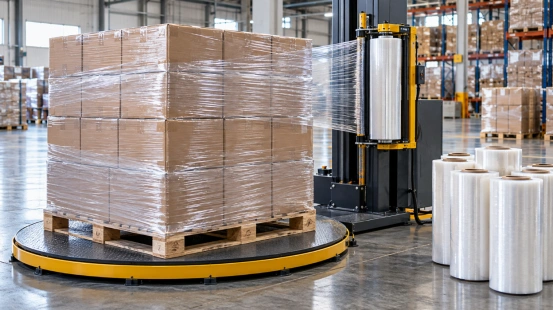
What Does Stretch Wrap Gauge Mean?
Stretch wrap gauge is just a trade word for film thickness. In the wrap world, 100 gauge is the exact same as 1 mil. One mil equals 0.001 inch, or 25.4 microns. Here is how you can easily switch between them: · Gauge ÷ 100 = mil · Gauge × 0.254 = microns
The gauge just tells you how thick the plastic is. How well it holds a load relies on other things. Two films with the exact same gauge can act in very different ways. The plastic mix, stretchiness, stickiness, and tear strength change how it works. Gauge is great for a quick check. But, it does not tell the whole story.
Which Gauge Equals Which Thickness?
Buyers often get one price in gauge and another in microns. You should change both to the same unit before you compare them. The numbers below show how they match up. We rounded them to make it easy.
|
Gauge |
Mil |
Microns |
Millimeters |
|
70 |
0.70 |
17.78 |
0.0178 |
|
80 |
0.80 |
20.32 |
0.0203 |
|
90 |
0.90 |
22.86 |
0.0229 |
|
100 |
1.00 |
25.40 |
0.0254 |
|
120 |
1.20 |
30.48 |
0.0305 |
|
150 |
1.50 |
38.10 |
0.0381 |
|
200 |
2.00 |
50.80 |
0.0508 |
Normal product data shows film thickness going from 0.018 to 0.050 mm. This is about 71 to 197 gauge. Widths go from 100 to 1,400 mm. These are just common choices. A single roll will just fit one part of this range.
How Thick Is 80 Gauge Stretch Wrap?
80 gauge stretch wrap is exactly 0.8 mil, 20.32 microns, or 0.02032 mm thick. It is a smart starting point for safe, neat pallets made of plain boxes. It works best if there are no sharp parts poking out. Of course, it still depends on the pallet shape. It also matters how people move the pallet.
When workers wrap pallets by hand, they pull the film differently. Every shift might look a bit different. If you compare hand wrap thickness, watch the workers. Make sure they pull it the same way every time.
When Does 100 Gauge Stretch Wrap Make Sense?
100 gauge stretch wrap is 1 mil, 25.4 microns, or 0.0254 mm thick. It can stop holes and tears much better. You might need it when a load is heavy or odd-shaped. It is also good for rough rides. If thinner film keeps snapping, try this one.
However, going straight to a thicker roll might mask the real problem. A sharp box corner or a big gap can cut thick film too. A bad base wrap can also ruin things. Fix the pallet setup first before just buying thicker plastic.
How Do You Choose the Right Stretch Wrap Thickness?
To pick the right stretch wrap thickness, write down your load details first. Do this before ordering a roll. Weight is a big deal. But shape, edges, and how you wrap it matter just as much.
Match the Film to Load Weight and Shape
Check your pallet weight, height, and shape. Look at how the boxes sit. Neat boxes make a nice, smooth face. Mixed items, open trays, and tall stacks push on the film in strange ways. A pallet might look great at first. Then, it leans over later when the boxes settle. This is easy to miss.
Check Edges and Puncture Risk
Look closely for sharp corners and rough wood. Check for empty spaces and hard metal bits. Thicker film helps stop cuts. But, corner guards might solve the problem better. Using less film with guards can save money. LLDPE film is great because it stretches well and sticks to itself. But any film will rip if a sharp point pokes it too hard.
Choose Hand or Machine Application
Buy hand stretch film if people do the wrapping. Make sure the roll is light enough for them to hold. For a machine, buy machine stretch film. It must fit the machine parts and stretch gears. You cannot pick a machine stretch film gauge without knowing the machine facts. The basic roll has a 76 mm core. Check this against your machine holder.
Compare Containment with Film Use
Check how much the load moves. Count film breaks and holes. A thin film might need many extra wraps. This wastes plastic. A thick film wrapped too loose is also a waste. Cost per pallet is way more useful than cost per roll.
Does Thicker Stretch Wrap Always Perform Better?
No, not always. Thicker film has more plastic. It stops holes better. But thickness alone does not keep the boxes tight. The film type, stretch amount, wrap style, and tightness all team up to do the job. Too much film wastes money. It also leaves a bad stack wobbly. The sweet spot is right in the middle. You have to test it yourself.

How Should You Test a New Gauge?
Try a new roll side-by-side with your old one. Use the exact same pallet setup. Move it the exact same way. Keep your machine settings the same. Write down the roll weight before and after. Count the wrapped pallets and broken film snaps. Time the job. See if any boxes move. After that, check the pallet after the forklift drops it off. A wrap that looks good but gets loose on the first turn is a fail.
What Should a Film Specification Include?
A clear order must state if you wrap by hand or by machine. List the load weight, size, and sharp edges. Give the width, thickness, and core size. Stretch film options from Weide Chuangyi Packaging offer good LLDPE hand and machine film.
Normal data shows widths from 100 to 1,400 mm. Thickness goes from 0.018 to 0.050 mm. They use a standard 76 mm core. Sharing your exact pallet details helps them find the best trial roll. Just giving the gauge is never enough.
FAQ
Q1: Is 80 gauge stretch wrap thick enough for pallets?
A: Yes, for neat, flat boxes. But you still must test your pallet shape, sharp edges, and wrap style.
Q2: What is the difference between gauge and microns?
A: They are two words for film thickness. One gauge is 0.254 micron. So, 80 gauge is 20.32 microns.
Q3: Can hand stretch film be used on a machine?
A: No. Machine rolls must match the wrapper parts and stretch gears perfectly.
Q4: Should sharp loads always use thicker stretch wrap?
A: Not always. Thicker wrap helps, but corner guards might block the sharp point much better.
Q5: How do you know a lower gauge is working?
A: Count the film used on one pallet. Watch for breaks and moving boxes. Only keep it if it meets your shipping goals.
