
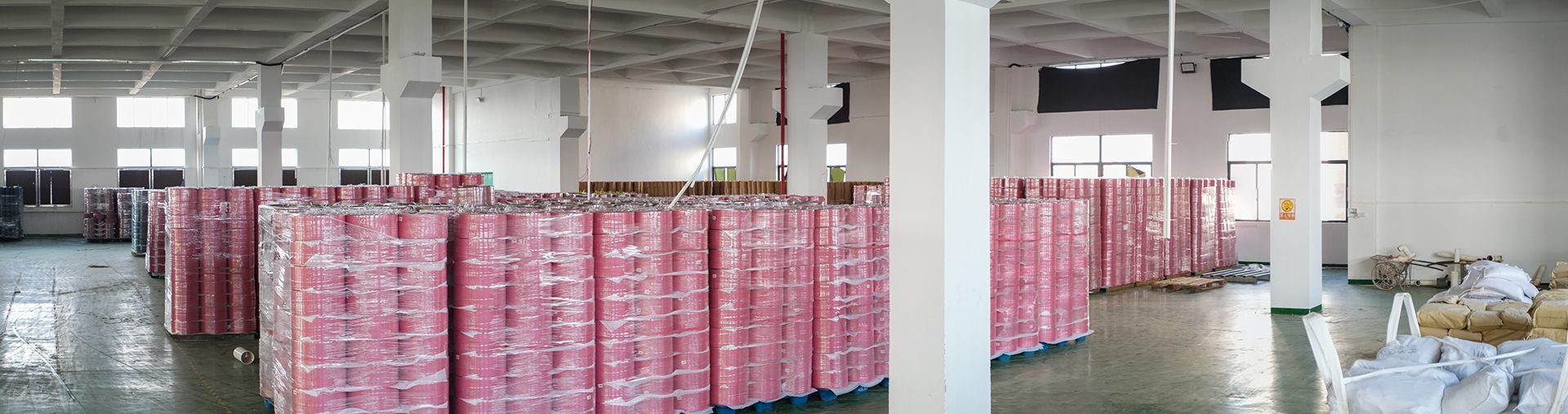
The Sourcing Checklist: Choosing the Right Industrial Flexible Packaging Manufacturer for Bulk Orders
2026-11-12Picking a maker for a huge order means you must look at price and material fit. You also need to check tool sizes and how alike each batch is.
Use this simple list to compare a flexible packaging manufacturer. Do this before you ask for samples, make tools, or sign a buy order. It shows what to ask a packaging supplier at every step. When you pick an industrial flexible packaging manufacturer, check if their items fit your needs. Look for real proof of quality. See how well they talk to you. If your team buys packaging materials in bulk, keep your approved spec sheet right next to your buy order. Look at what they make before you compare suppliers.
What Should an Industrial Flexible Packaging Manufacturer Offer?
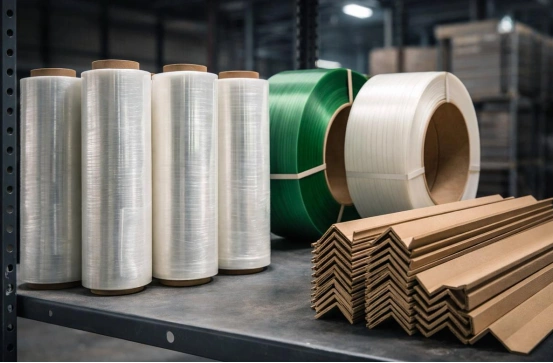
Start with the whole packaging job. A good supplier might need to give you film, strapping, tools, or safe add-ons. This depends on how you build, wrap, and ship your load.
Review the Product Range
See if the supplier makes the exact things you use. A good list might include LLDPE stretch film, PP strapping, and PET strapping. They might also sell manual tools, pneumatic or electric balers, steel buckles, and paper corner protectors. Their list should share enough facts for a first tech talk.
You must look at hand and machine types one by one. Hand film relies on how a worker holds it. Machine film relies on the wrapper and roll dimensions. It also depends on the prestretch system and tension settings. A simple label leaves out too many facts.
Check Material and Application Fit
Ask about the material, load type, and how to use it. Find out what tool works with it. Data sheets say LLDPE stretch film holds loads tight. It keeps out dust, stops wetness, and cuts down damage. PP strapping works well for light to medium boxes and some pallet tying. PET strapping fits jobs that need tension retention. It fights off hard hits and stays strong in bad weather. Check these tips against your real pallet and gear.
Which Technical Specifications Should You Confirm?
Your buying spec sheet must list the material, dimensions, and finish. It should name the core or tool fit and how to use it. Add the unit used for every size check.
Confirm Dimensions and Common Ranges
For stretch film, ask about the LLDPE material, width, and thickness. Also ask for the core, roll length, and roll weight. Normal data shows widths from 100 to 1,400 mm. It lists thicknesses from 0.018 to 0.050 mm and a 76 mm paper core. These are just basic guides. Each item might have a smaller choice.
For PP or PET strapping, check the width and thickness. Look at the surface finish, edge condition, coil length, and tool type. Normal PP specifications include 1206, 1208, 1507, 1508, and 1510. Normal PET specifications include 1508, 1608, 1609, and 1910. The price quote must state the exact specification they will send.
Review Functional Performance
You should test stretch film for self-adhesion, elongation, and clear looks. Check its tear resistance during a real wrapping job. PP strapping must meet your needs for plasticity and bending. It must also handle tensile impact well. You should check PET strapping for tension retention, smooth edges, and double-sided embossing. Test its moisture resistance and tool fit.
This same list works well for add-ons. Paper corner protectors hold up pallet edges. They help spread out heavy weight. You can get galvanized steel buckles to manually join PP, PET, or steel straps. Common sizes are 16 mm × 0.5 mm and 19 mm × 0.5 mm.
How Do You Audit Packaging Quality Before a Bulk Order?
Checking your packaging quality must follow a clear list you can repeat. A clean sample gives you a nice first look. But real size checks and usage tests give you true buying proof.
Inspect Raw Material and Surface
Ask what raw material shows up on the quote and product specification. Check that the shipped material matches that naming. Look at how clean it is. Check the surface pattern, color, edge finish, and any clear flaws. Smooth edges matter a lot. This is true when workers hold PET or PP strapping near boxes and gear.
Check Dimensional Consistency
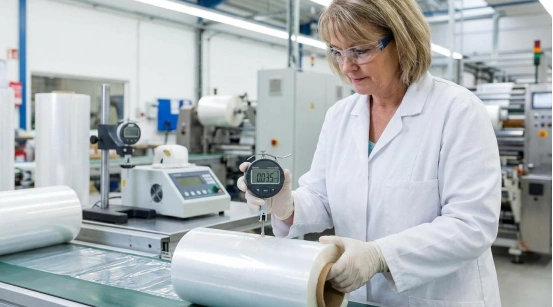
Measure the width, thickness, and roll or coil weight. Check the core size and unit length if your spec sheet asks for them. Ask how they check thickness uniformity across a whole batch. For strapping, compare the cross-section and edge condition at a few spots on the coil. These easy checks spot small spec changes early.
Match Tests to the Product
Test your film for adhesion, elongation, and tear resistance. Watch its wrapping behavior. Test strapping for tensile behavior, bending, and weld or buckle fit. Check its edge safety. Run the sample on the exact tool and load you use for daily work. A test with a different pallet or machine can give you a wrong answer.
What Should You Ask About Custom Packaging Specifications?
Put every custom request into one single specification sheet. Include width, thickness, color, and printed information. Add your logo file, roll weight, core, and coil length. Write down carton marks and pallet packing instructions if you need them.
Ask which choices need a custom making plan. Ask for a written change note before you say yes to the buy order. This links all future orders to your approved sizes and art.
How Do Samples and Trial Orders Reduce Sourcing Risk?
Use the sample on your real load, tool, and moving path. Keep your trial notes in writing. Write down film breaks, load moves, and wrapping time. Track seal or weld performance, strap slippage, and edge contact. Note any visible damage.
Set a written yes-point for the material, dimensions, and looks. Add packing marks and your inspection method before the first big order.
Which Commercial Details Matter in Bulk Packaging Orders?
Check the MOQ, quote date limit, and packing method. Ask about payment steps, check points, shipping marks, and papers. Ask how a change to size, material, color, or art changes the whole order. Put the agreed unit, tolerance limit, date, and approved sample on the buy order.
Huge packaging orders deal with high counts, repeat steps, and tight spec control. A supplier who saves your approved specification gives your next order a clear starting point.
What Makes Supplier Communication Reliable?
Pick one tech person and one sales person to talk to. Use one spec sheet and one approved file. Ask for a written note when the material, dimensions, tools, or outer boxes change.
You can judge an industrial packaging supplier by how well they answer you. Price is not the only thing. Clear talks, exact sizes, and fast changes make the buying process much easier to follow.
Matching Capability to Your Order
The items from Weide Chuangyi Packaging cover flexible packaging products. You use these for wrapping, strapping, and pallet protection. Their info lists LLDPE hand and machine stretch film, PP and PET strapping, balers, steel buckles, and paper corner protectors.
These listed materials and size ranges give buyers a solid start for a tech ask. You can talk about custom choices based on your real load and tool. The winding film series helps a lot when a film order needs a check for width, thickness, roll weight, or core size. This gives you a common specification to use when comparing an industrial flexible packaging manufacturer.
FAQ
Q1 What should you request from a flexible packaging manufacturer before ordering?
Ask for the material, dimensions, and tolerances. Request the application method, tool fit, and packing method. Note the inspection points and approved sample details. Keep all these things in one single written specification.
Q2 How do you compare two packaging suppliers?
Compare their tech fit, quality checks, and sample results. Look at their talks, custom work, order rules, and repeat-order control. The unit price is just one small part of that match-up.
Q3 Should samples use the same material and dimensions as the bulk order?
Yes. The sample must match the named material, width, and thickness. It must have the same core, finish, and tool fit. Test it on your real load and true application process.
Q4 Can one supplier provide film, strapping, and accessories?
Some suppliers sell all three types. Check each product specification by itself. Check the material, dimensions, equipment fit, and inspection requirements.
Q5 What quality details belong on a purchase order?
List the material, size, tolerance, and finish. Add the unit, roll or coil weight, and core. Write the packing marks, approved sample, inspection method, and revision date. These facts give your big order a very clear map.
