

Mastering PET Strapping: Breaking Force, Elongation, and Recovery Rate
2026-04-09

In the fast-paced world of logistics, ensuring the safety of your cargo isn’t just about choosing the right shipping method—it’s about the materials that keep your shipment secure. PET strapping is a cornerstone of modern packaging, offering unbeatable performance in securing loads during transport. But what makes a quality PET strap stand out? Understanding key technical parameters like Breaking Force, Elongation, and Recovery Rate can make all the difference.
These specifications not only impact the immediate safety of your shipment but also ensure its stability throughout the journey. Whether you’re transporting delicate goods or heavy industrial equipment, mastering these elements can elevate your packaging strategy to meet both safety and cost-efficiency goals.
Breaking Force: The Foundation of Load Security
Defining Nominal and System Breaking Strength
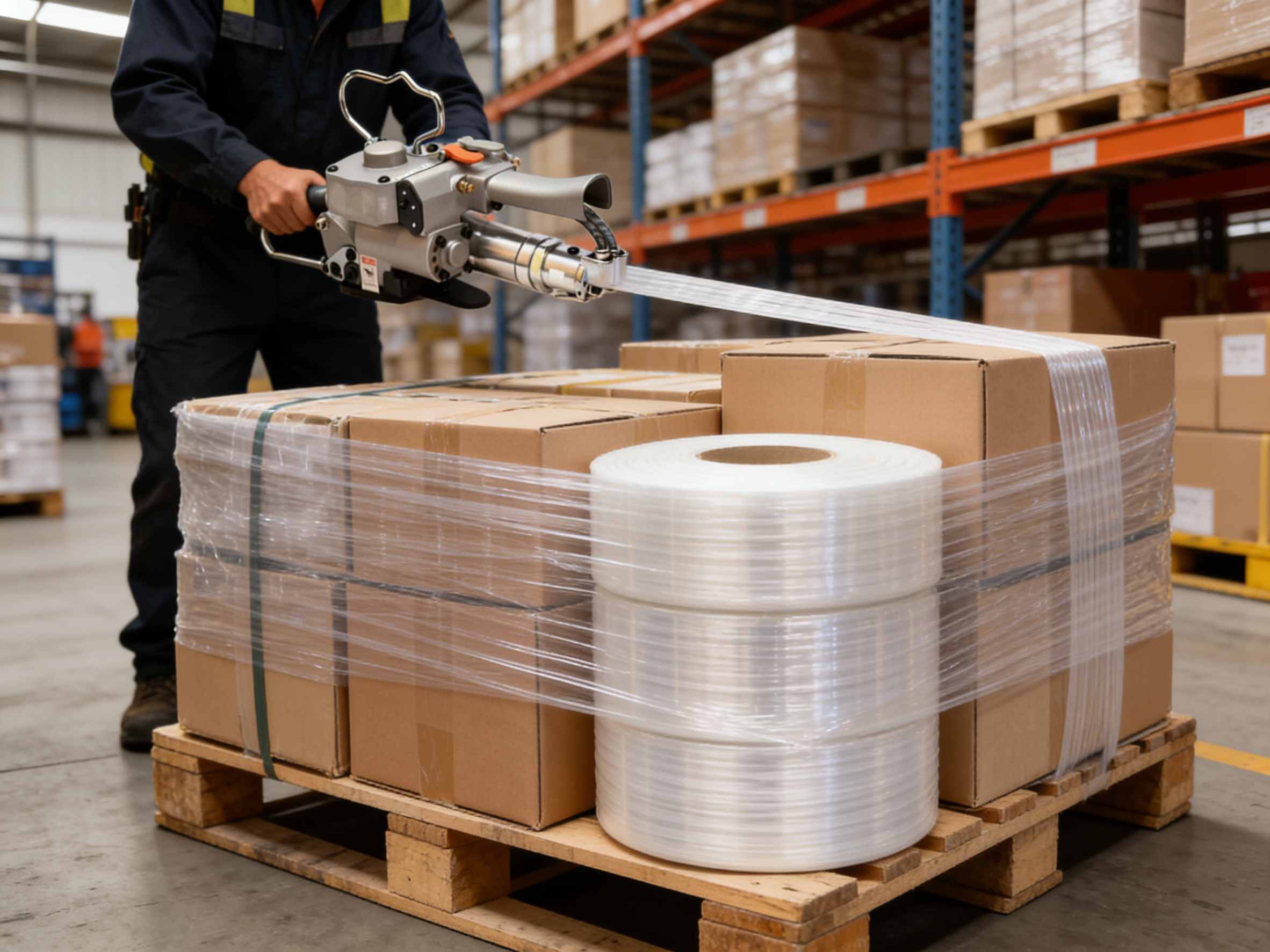
When you look at PET strapping specifications, the first number you likely see is the “breaking force.” This refers to the maximum load the strap can withstand before snapping. However, for a technical buyer, it is essential to distinguish between the strap’s linear breaking strength and the “system strength.” The system strength includes the efficiency of the joint, whether it is created by a manual tool or a Pneumatic baler PET strap.
Correlation Between Strap Thickness and Strength
Just as the thickness of Machine Stretch Film or Hand stretch film determines its puncture resistance and containment force, the thickness and width of a PET strap are directly proportional to its breaking force. For example, a wider strap used with our Strap tensioner for wide strapping bands 12 to 19 mm will naturally offer a higher breaking threshold than a narrower 5 mm variant. For engineers, selecting the right thickness is a balancing act: you need enough strength to secure the load, but over-specifying can lead to unnecessary material costs.
Elongation at Break: Managing Transport Shocks
Defining the Elasticity of PET Straps
Elongation at break is a measure of how much the strap can stretch before it finally fails. While some might think “stretch” is a negative trait, it is actually a vital safety feature for strapping for stable transport. Our PET strapping belt/Heavy Duty Packing Belt is engineered with a specific percentage of elongation to allow the strap to “give” slightly when the cargo experiences a sudden jolt, such as a truck hitting a pothole or a ship encountering rough seas.
How Elongation Absorbs Impact Energy
If a strap is too rigid (like steel), a sudden impact can cause it to snap instantly because it cannot absorb the energy. PET strapping acts like a shock absorber. This is particularly important for the logistics industry and the transport of fragile goods like ceramics. By utilizing a material with controlled elongation, the kinetic energy of a shock is dissipated throughout the strap, protecting the integrity of the entire pallet.
Recovery Rate: Ensuring Strapping for Stable Transport
The Science of Elastic Memory
The “Recovery Rate” is perhaps the most overlooked technical parameter, yet it is the most critical for long-term load stability. It refers to the strap’s ability to return to its original length after being stretched. This “elastic memory” is what keeps the load tight over time. In industries where products may settle or shrink during transport—such as wood or bundled clothing—the strap must contract as the load volume decreases to maintain tension.
Polyester Strapping vs Polypropylene Recovery Performance
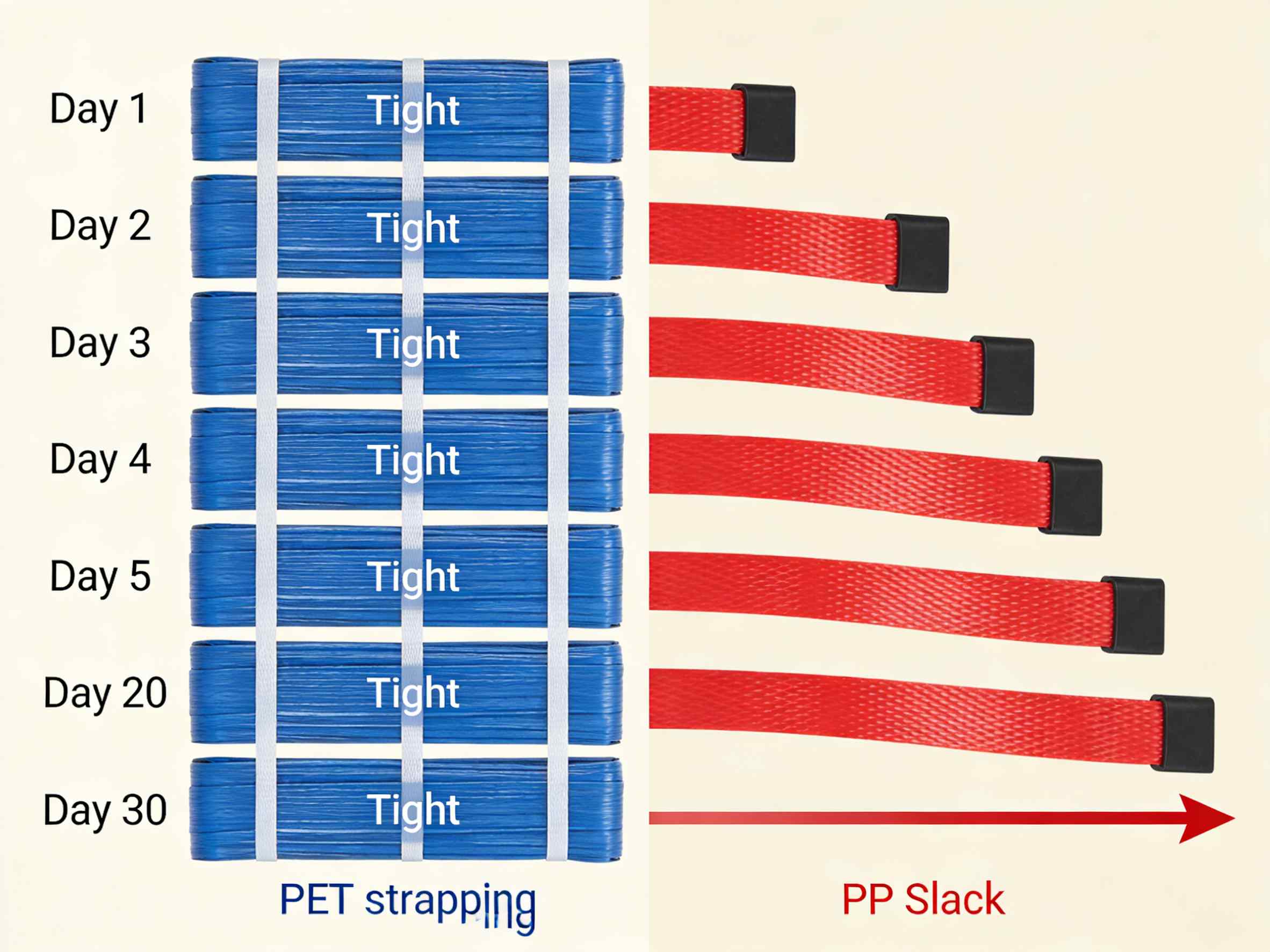
When comparing polyester strapping vs polypropylene, the recovery rate is where PET truly shines. While our PP strapping belt Polypropylene straps are excellent and affordable for light and medium-sized cargo, they have a lower recovery rate and tend to “relax” or lose tension over time if the load settles. In contrast, our PET strapping belt behaves much like a heavy-duty rubber band with massive strength; it stays tight throughout the entire journey. This makes it the superior choice for strapping and packaging wholesale when international shipping is involved.
Analyzing Specifications for Precision Selection
How Parameters Interact During Transport
A successful packaging strategy doesn’t look at breaking force or recovery rate in isolation. Instead, engineers must look at how they interact. A strap with a high breaking force but a poor recovery rate will eventually result in a loose load. Conversely, a strap with high elongation but low strength will not be able to contain heavy items like magnesium ingots. At Weide Chuangyi Packaging, we provide a holistic view of these specifications. We often recommend a combination of products, such as using our Brown Paper Edge Protector Corner Protectors alongside our PET straps to distribute tension evenly and prevent the strap from damaging the edges of the cargo.
Sourcing Reliable China Plastic Strap for Packing
As a leading manufacturer, we pride ourselves on transparency. When procurement professionals evaluate what pet strapping quality is, they should look at the consistency of the surface—whether it is smooth or textured. Our News Center often highlights these nuances, such as why textured PET might be better for certain machine applications while smooth PET offers different friction coefficients. By acting as a technical consultant rather than just a vendor, we help our partners optimize their supply chains, reduce hidden logistics costs, and improve their margins through strategic material buffering.
Conclusion
Choosing the right PET strapping isn’t a matter of simply picking the strongest material on the market; it’s about selecting a solution that balances Breaking Force, Elongation, and Recovery Rate for optimal cargo security. At Weide Chuangyi Packaging, we believe in a holistic approach to packaging, where every element—down to the texture of the strap—works in harmony to protect your goods. With our 21 years of expertise in manufacturing and a commitment to high-quality, precise materials, we are more than just a supplier—we are your technical partner in global logistics.
Ready to secure your cargo with the industry’s best PET strapping solutions? Contact us today for a personalized consultation and quote. Let’s work together to optimize your packaging process and improve your bottom line.
FAQ
Q: What is the difference between PET and PP strapping?
A: While both are plastic, PET (polyester) offers much higher tension retention and a superior recovery rate compared to PP (polypropylene). Weide Chuangyi Packaging PET straps behave more like steel, maintaining tightness even if the cargo settles or shrinks during long-term transport.
Q: Why does my strapping get loose during shipment?
A: Loosening is often caused by a low recovery rate or using the wrong material for a load that settles. If a strap lacks elastic memory, it cannot snap back as the load shifts. High-quality PET Strapping Specifications from Weide Chuangyi Packaging prioritize a high recovery rate to ensure “strapping for stable transport”.
Q: Can I customize the strapping for my brand?
A: Absolutely. Weide Chuangyi Packaging provides Custom PP/PET strapping where we can print your LOGO and other text information directly on the belt, helping you boost brand visibility while maintaining high technical performance.
