
PET Plastic Steel Strapping: Safe Transport, Proper Use & Tips
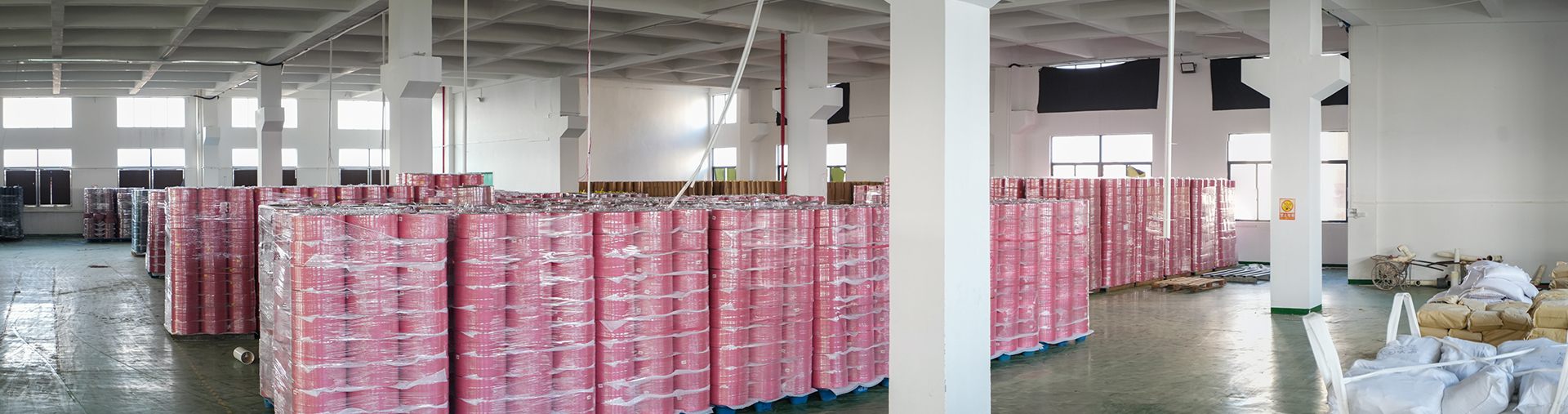
2026-09-11A PET strap roll appears incredibly durable. It feels robust. It is exceptionally lightweight. Plus, warehouse operators find it straightforward to apply. However, damaged rolls create severe issues down the line.
This typically happens during final tensioning. A concealed split might suddenly snap open. Therefore, quality PET plastic steel strapping requires cautious management. This careful handling must extend from the storage warehouse directly to your packing line.
Why Is PET Plastic Steel Strapping Used for Heavy-Duty Packaging?
PET plastic steel strapping features a solid polyester build. It operates as an excellent substitute for traditional steel strapping. Users gain massive tensile strength. You also receive solid impact resistance. Furthermore, the material maintains tension beautifully. Best of all, it skips the heavy weight and dangerous edges of metal.
Steel-Like Strength With Less Weight
The density of PET strapping sits around one-sixth of metal. A single ton provides nearly identical length to six tons of steel strapping. This massive difference truly counts. It matters most when moving bulk orders. It also helps when shipping freight over extended distances.
The strap holds strict tension post-packing. Consequently, cargo rarely shifts during loading, offloading, or lengthy road transport. Additionally, PET strapping provides necessary elongation during harsh impacts. It won’t instantly snap at a sudden shock. Instead, the plastic absorbs the force. This keeps your heavy load firmly secured.
Safer Handling on the Packing Line
Sleeker edges minimize warehouse risks. They prevent ruined cartons and cut hands. You can snip PET strapping easily. It avoids the specialized cutting gear usually required for steel strap. Depending on your specific task, several tools work. You might grab a pneumatic baler.
A portable electric baler works nicely too. Alternatively, a manual tensioner utilizing a metal buckle does the trick. This strap secures paper, wood, steel, and aluminum perfectly. It also handles glass, ceramics, and demanding building materials. Crucially, it never rusts. Its neat visual finish looks highly professional for international export packaging.
What Causes PET Strap Compression Damage?
The primary danger rarely originates from standard tensioning. Rather, the problem starts with pressure pushing in incorrect directions.
Longitudinal Pressure and Sharp Bends
If you fold or intensely bend the strap lengthwise, trouble occurs. The core material splits into two distinct layers. A crushed roll underneath heavy freight might still look totally fine outside. Yet, it will inevitably fail once pulled taut.
Do not place machinery, metal bundles or heavy cartons directly on PET rolls. Keep the rolls supported on a flat pallet and away from corners that can press into the strap.
Dropping, Throwing and Impact
PET strapping can handle impact when it is securing a load. A loose roll hitting a concrete floor is different. Dropping or striking the roll can create small cracks, especially along the embossed surface or edge. The damage may only appear when the strap is tensioned.
A simple rule works well here. Move the roll with both hands or suitable handling equipment. Do not drag it across the floor.
How Should You Transport PET Strapping Safely?
Good PET strapping transportation starts with the outer packaging. The goal is to keep pressure, moisture and dust away from the roll.
Use Moisture-Proof and Dust-Proof Packaging
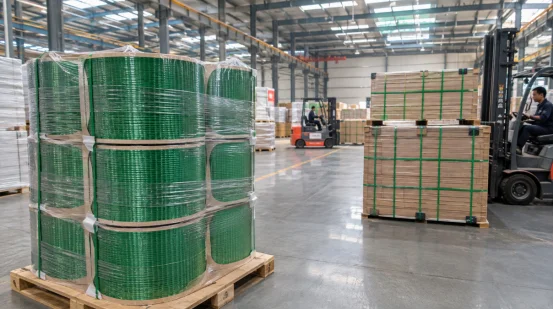
Wrap the roll tightly with stretch film. Add a layer of paperboard around the middle, then apply another film layer. This packaging method helps protect the strap from dust and moisture while reducing direct contact between rolls.
Stretch film also keeps loose material from scattering during loading and delivery. Check the wrap after every transfer. A torn outer layer is worth replacing before the roll enters storage.
Keep Rolls Stable During Loading
Place rolls on a level surface and stop them from rolling. Use pallets, separators or corner supports when needed. Do not stack unstable cargo on top of the strap.
During forklift work, keep the forks clear of the roll body. A small puncture from a fork edge can become a full split under tension.
Avoid Extreme Heat and Cold
High temperatures may soften PET strapping for a period of time and reduce its working strength. Direct sun inside a closed truck can create surprisingly high heat. Low temperatures can make the strap less flexible and more brittle.
Store PET strap rolls in a dry, ventilated place away from direct sunlight, heaters, rain and condensation. When a cold roll arrives at the packing area, give it time to reach room temperature before applying high tension.
Which PET Packing Belt Usage Mistakes Should You Avoid?
Many failures begin with a mismatch between the load, the strap and the tool.
Do Not Over-Tension the Strap
More tension does not always mean a safer package. Excess force can damage the strap, crush cartons or deform fragile products. Set the tension according to the load weight, package shape, strap thickness and machine instructions.
Choose the Right Specification
Manual packaging often uses straps around 15 mm wide and 1.0 to 1.3 mm thick. General-purpose applications may use 9 to 13 mm widths with 0.8 to 1.0 mm thickness. Fully automatic equipment commonly uses narrower, lighter material.
Before use, check the roll label, width, thickness and tool range. A mismatch can cause poor feeding, weak joints or sudden breakage.
Inspect the Roll Before Feeding It
Your PET strapping quality checklist should include the surface, edges, cross-section and thickness. Look for frayed edges, cracks, dust, moisture and uneven sections. A good strap feels consistent and has a clean, smooth cut.
For manual work, align the overlapping ends before inserting a galvanized steel buckle. For machine work, make sure the strap is suitable for friction welding. The joint deserves the same attention as the strap itself.
Protect Sharp Corners
Use a Paper Corner Protector when the load has sharp edges. Corner protectors spread pressure across a wider area, help prevent strap cuts and add stability to palletized goods. This small step often saves a full rework later.
How Can You Check PET Strapping Before Long-Distance Shipping?
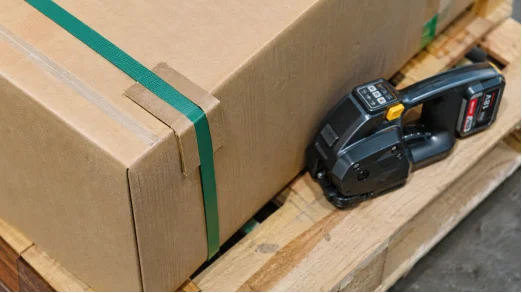
Before a truck leaves, check whether the package still looks the way it did after sealing. The strap should sit flat, retain tension and remain free from cuts. Confirm that buckles or welded joints are fully engaged. Check that corners have protection and that no strap section presses against a sharp pallet edge.
For long-distance transportation, inspect several packages rather than only the first one. Small differences in tension or load shape can show up across a pallet row.
What Can You Expect From a Reliable PET Strapping Supplier?
The right supplier should help you match material, dimensions and equipment to the load. Weide Chuangyi Packaging supplies PET polyester strapping made from selected PET raw materials, with attention to tensile strength, bending resistance and dimensional consistency. The straps have smooth edges, double-sided embossing and a textured surface that helps reduce slipping.
Available options include green and black straps, with specifications suited to pneumatic and electric balers. Related packaging items, such as stretch film, galvanized buckles and paper corner protectors, can support a complete packing setup. You can review the Plastic Steel Strapping range and compare the required width, thickness and application before ordering.
That product fit matters. A strong strap still performs poorly when the tool, joint method or load design is wrong.
FAQ
Q1: Can PET plastic steel strapping be used for long-distance transportation?
A: Yes. It retains tension well and offers impact resistance, making it suitable for long-distance shipping when the strap is selected and applied correctly.
Q2: Can heavy goods be stacked on PET strap rolls?
A: No. Direct pressure may deform the rolls or cause hidden cracks. Keep heavy goods separate from the strap packaging.
Q3: Does cold weather damage PET strapping?
A: Very low temperatures can make PET strapping less flexible and more brittle. Let cold rolls warm to the packing area before high-tension use.
Q4: Which tools can apply PET strapping?
A: Pneumatic balers, portable electric balers and manual tensioners with compatible buckles can all be used, depending on strap size and packaging volume.
Q5: Why should you use a paper corner protector with PET strapping?
A: It spreads pressure across the package corner, reduces cutting and helps keep pallet loads stable during handling and transport.
