

Polyester vs Steel Strapping: 4 Main Benefits of PET Straps
2026-08-21A pallet may look tight when it leaves the packing station, then arrive with loose bands after a long truck ride. Cartons settle. Timber dries a little. Repeated vibration shifts the load by a few millimeters. Those small changes matter when you compare polyester strapping vs steel strapping.
Breaking strength is only one part of the decision. You also need to consider load retention, impact absorption, moisture, worker safety, and total packaging cost. For many industrial packaging jobs, PET strapping is a practical steel strapping alternative. Steel remains useful for hot products, sharp edges, and rigid loads that allow very little stretch.
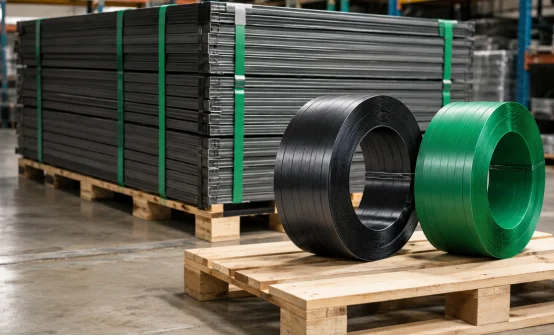
How Do Polyester and Steel Strapping Compare?
PET strapping vs steel strapping is sometimes reduced to a strength comparison. Real loads make the choice less tidy.
Steel strapping has high tensile strength and low elongation. It holds rigid cargo firmly and performs well where heat or cutting edges could damage plastic strap. Its weight, sharp edges, and recoil under tension can make handling harder.
Polyester strapping is lighter and more flexible. It stretches when a load takes a hard hit, then recovers part of that movement. This helps the strap stay in contact as cartons compress or a bundle settles.
Material quality affects the result. Width, thickness, raw material, surface finish, and joint efficiency can matter as much as the name of the material. A wide strap with a poor weld may still fail early. That detail gets missed quite often.
What Are the Four Main Benefits of Polyester Strapping?
The benefits of polyester strapping become most useful after the pallet leaves the packing line. A strap must keep working during storage, forklift handling, road vibration, and unloading. These polyester strapping advantages address four common concerns across that full trip.
1. Better Load Retention and Impact Absorption
Steel can hold strong initial tension, but it stretches very little. When cartons settle or timber changes shape, the strap may no longer fit as tightly as it did at the start.
PET has controlled elongation. Knowledge base material notes that a suitable PET strap can maintain about 5 percent tension without loosening and provide about 5 percent elongation under a strong impact. The exact figures depend on the strap grade and test method, so you should check the specification before using them in a load calculation.
The basic behavior is straightforward. PET absorbs part of a shock instead of passing the full force to the joint, package corner, or product surface. Its load retention makes it useful for timber, paper, bricks, ceramics, building materials, and other loads that settle slightly in transit.
A pallet does not need to move much before a rigid band starts to feel loose. A few compressed carton corners can be enough.
2. Greater Corrosion Resistance and Product Protection
Polyester does not rust. You can use it around moisture, changing weather, outdoor storage, and export shipments without worrying about the rust marks associated with unprotected steel.
This corrosion resistance matters when you bundle paper, coated metal, timber, glass, or finished products. A rusty line across the package can turn a secure shipment into a customer complaint even when the goods remain usable.
PET also has smooth edges and good flexibility. It is less likely to scratch packaging or cut into a finished surface during normal handling. You should still use corner protection where concentrated tension could mark the load. Sharp metal edges can also cut PET, so check the actual package rather than relying on a material label.
3. Improved Worker Safety and Easier Handling
Steel strap can cut hands and scratch products. It may also recoil when a worker releases stored tension. PET removes the sharp metal edge and usually produces less dangerous recoil when cut correctly.
The rolls are lighter, which helps during carrying, threading, and roll changes. PET can work with manual tensioners, battery powered tools, pneumatic tools, and automatic machines when the strap dimensions match the equipment.
Worker safety still depends on sensible practice. Gloves, eye protection, correct tension, and a controlled cutting position remain necessary. PET is safer to handle, though no tensioned strap should be treated casually.
4. Lower Total Packaging Cost and Better Recyclability
The price of one roll gives you an incomplete cost comparison. Total packaging cost also includes usable length, seals, tools, labor, freight, damaged goods, and handling incidents.
PET has roughly one sixth the density of steel according to the supplied product information. One ton of PET strap may provide about the same length as six tons of steel strap when you compare suitable specifications. That lower weight can reduce material use and make rolls easier to move.
Cost per meter is often lower as well. The final saving depends on strap size, equipment, joint method, and local prices, so a fixed saving percentage can be misleading.
PET is recyclable strapping. Collection rules differ by location, and some recyclers require clean material separated from clips or other packaging waste. It is worth checking before you put a recycling claim on customer paperwork.
When Should You Use Steel Strapping?
Steel is still a sound choice for hot loads, products with cutting edges, and cargo that permits almost no elongation. Some metal processing and railway applications also follow specifications that call for steel.
Do not replace steel by matching strap width alone. Compare breaking force, working tension, joint efficiency, edge condition, storage temperature, and likely load movement. If the shipment travels far, test a complete pallet on the actual route.
This is where polyester strapping vs steel strapping becomes a load question rather than a material question. The right answer comes from the package, the journey, and the equipment working together.
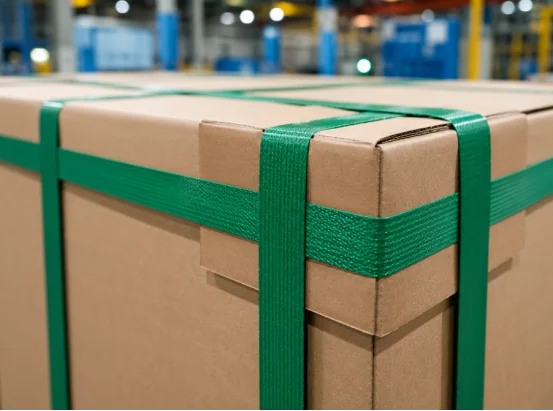
How Can You Select Polyester Strapping for Heavy Loads?
When selecting polyester strapping for heavy loads, start with the load weight and package dimensions. Then check the corners, required breaking force, tensioning tool, and joint method.
The available strap series includes PET models from 9 mm to 32 mm wide. Listed breaking force values range from 1,920 N to 15,360 N. Each value belongs to a specific width and thickness combination. Picking the highest number by default can waste material or place too much pressure on the package corners.
Check the strap itself as well. A good PET strap should feel firm and smooth, with even edges and no obvious impurities. Repeated bending should not cause easy splitting, white stress marks, or brittle failure. If you use a machine, provide its model and required strap dimensions before ordering. Tool compatibility saves a lot of trouble later.
What Should You Expect from a Practical PET Strap Supplier?
Once PET fits the load, supplier capability becomes part of the decision. You need consistent dimensions, several strength choices, inspection controls, and advice based on the package rather than one stock recommendation.
Weide Chuangyi Packaging produces PET and PP strapping, machine grade straps, stretch film, and paper corner protectors. Its PET range covers several widths and breaking force levels, with specification review for size, color, roll weight, and application. The company reports 12 product inspection standards and combines product development, production, and sales within the same packaging material business. These capabilities help when you need to match the strap, tool, and edge protection for timber, metal products, building materials, warehousing, or textile loads.
FAQ
Q1: Is polyester strapping as strong as steel strapping?
A: High strength PET can replace some steel strap specifications. Compare breaking force, joint efficiency, required tension, temperature, and edge conditions before making the change.
Q2: Can polyester strapping replace steel strapping?
A: Yes, for many pallet, timber, paper, brick, and transport loads. Steel may still be required for hot products, sharp edges, or loads that cannot tolerate stretch.
Q3: Is polyester strapping suitable for heavy loads?
A: Yes. Select the correct width, thickness, breaking force, and joint method. Current PET specifications list breaking force values from 1,920 N to 15,360 N.
Q4: Does polyester strapping rust?
A: No. PET does not rust and works well in damp storage or changing weather. Check its temperature and UV rating before long outdoor exposure.
Q5: Is polyester strapping cheaper than steel strapping?
A: It is often cheaper per usable meter and lighter to handle. Compare tools, labor, freight, product damage, and recycling costs along with the roll price.
