
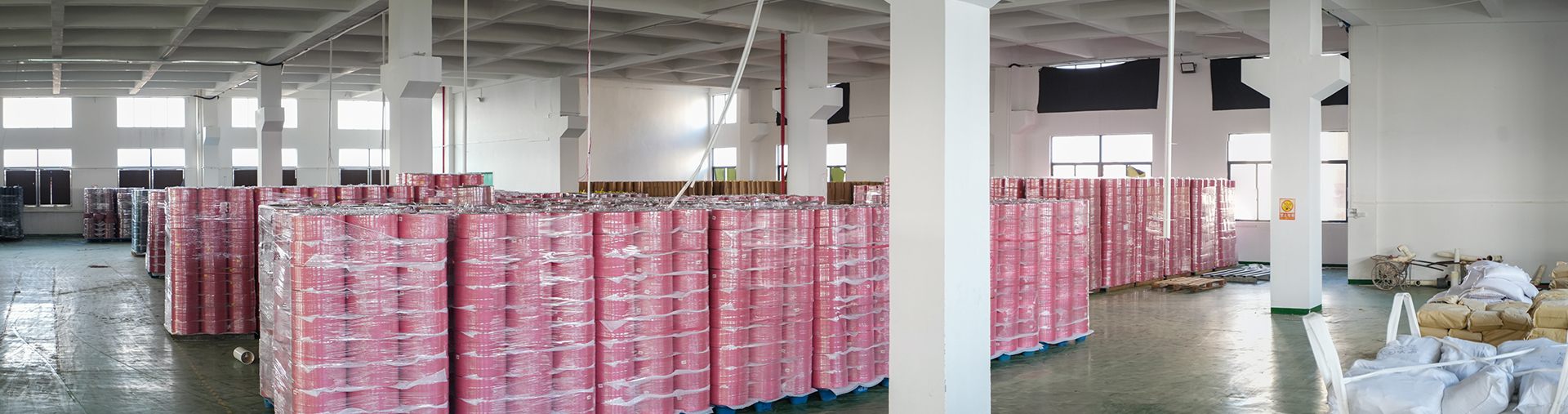
Types of Packaging Materials: Layers, Families & Industrial Selection
2026-08-28How many types of packaging materials are there? You will not find just one set number. People group them in many ways. You can sort them by the raw stuff they are made of, what they do, or their layer. The main materials are paper, plastic, glass, metal, wood, foam, and green choices. You see these everyday as boxes, bottles, wraps, bands, pallets, and corner guards.
For buyers, just asking how many exist is not enough. The real trick is finding what fits the product. They must look at load weight, travel conditions, and their own packing tools.
How Many Types of Packaging Materials Are There?
You can sort them by layers: primary, secondary, tertiary, and ancillary packaging. Or, you can group them by raw stuff like paper, plastic, glass, and metal.
Material Families and Packaging Formats
A raw material is not the same as a finished package. For example, PET is just the raw stuff. But PET strapping is a real product you can hold. Makers use LLDPE to create stretch film. Kraft paper easily turns into boxes or paper corner protectors. Knowing this difference helps you compare things much faster.
What Are the Four Main Types of Packaging?
The four main types tell us where the wrap goes. They show the layers from the item itself to the big shipping truck.
Primary, Secondary, Tertiary, and Ancillary Packaging
Primary packaging materials touch the actual item. Think of bottles, jars, cans, and bags.
Secondary packaging materials hold those primary ones together. Cartons, sleeves, and basic trays do this job.
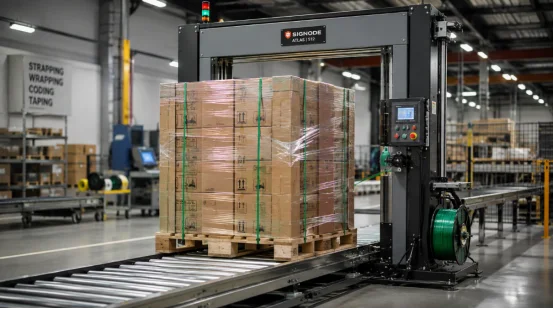
Tertiary packaging materials help you store and move heavy loads. Pallets, stretch wrap, huge bins, and strapping go here.
Ancillary packaging means the extra bits. This includes tape, sticky labels, buckles, and edge protection.
What Are the Most Common Packaging Materials?
The top choices are paper, plastic, glass, metal, wood, and soft foam. Each handles a unique problem nicely.
| Material | Common Format | Main Use |
|---|---|---|
| Paper | Cartons, corner protectors | Grouping and edge protection |
| Plastic | Film, bags, straps | Wrapping and containment |
| Glass | Bottles, jars | Product containment |
| Metal | Cans, drums, buckles | Strength and closure |
| Wood | Pallets, crates | Heavy transport |
| Foam | Inserts, pads | Cushioning |
What Are Paper Packaging Materials?
These cover thick corrugated board, thin paperboard, strong kraft paper, and tough edge guards.
Kraft Paper and Paper Corner Protectors
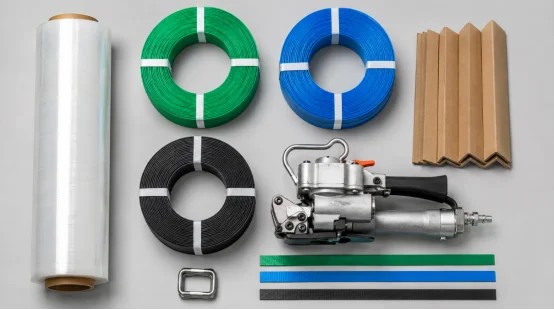
Paper corner protectors use kraft paper liner and spun bobbin paper. They make box edges and whole pallets much stronger. They also stop boxes from crushing when they tilt over. When you pull straps tight, these guards spread out the heavy pinch. They stop the strong force from breaking just one spot on the box.
What Are Plastic Packaging Materials?
Plastic materials cover clear wraps, bins, bags, and strapping. In big factories, PP, PET, and LLDPE are super common.
PP, PET, and LLDPE
PP strapping is light and bends well. It is cheap and does not snap easily. Workers use it for cartons, home machines, books, clothes, food, and daily shipping. It runs fine with hand tools or fast auto balers. You can buy it in many widths, colors, and sizes.
PET strapping gives you a much stronger pull. It holds its tight grip way longer. It fights off wet weather easily. Data shows it stays stable from about -50°C to 100°C. Also, it has no sharp metal edge like old steel bands.
LLDPE stretch film stretches really far. It sticks nicely to itself. It is super clear and fights rips. It holds big pallet loads safe and tight. Plus, it blocks out dirt and water.
What Is the Difference Between PP Strapping and PET Strapping?
Both are super important. But, they fit totally different jobs.
Choose by Load and Packing Method
PP strapping works best for light or medium loads. It is great for normal boxes and saving cash.
PET strapping wins for heavy pallets. It is great for long trips and staying super tight. Its weight is way lighter than steel. It bends well, so workers stay safe.
Also, your bands must match your tools. Hand tools work for slow jobs. Air-powered and fast electric balers rock when you pack all day long.
What Is Stretch Film Packaging Used For?
This wrap mostly hugs big pallets tight while they sit or travel.
Load Stability and Protection
Stretch film is super handy for moving goods. LLDPE film sticks fast to itself. It stops boxes from sliding around. It also saves your stuff from dust, rain, and bad scratches. As a top protective wrap, it shines when you plan well. You must think about tightness, overlap, and sharp corners all at once.
What Are Industrial Packaging Materials?
These focus purely on staying safe, moving easy, and tough travel. They do not care about looking pretty in a store.
Build a Complete Packaging System
A pallet might use stretch film to hold things in. It uses PP or PET straps to pull tight. It adds paper corner protection to stay strong. Lastly, it needs steel buckles or heat melting to lock the strap. You can use shiny galvanized steel buckles on both strap types. Air machines run both PP and PET material too. They all work best as a massive team. The film, bands, corners, and tools all change the final load.
Which Packaging Materials Are Best for Shipping?
The best pick depends on your item’s weight and if it breaks easily. Distance, weather, and tools matter too.
Match the Material to the Load
Light boxes might just need simple cardboard, film, and PP strapping. Big heavy pallets often beg for PET strapping, thick stretch film, wood pallets, and edge protection. Glass things need soft cushions. Cost is key, but broken goods cost more. A cheap wrap is terrible if the box falls apart.
Which Sustainable Packaging Materials Can You Choose?
Judge green choices by how much they use and if you can reuse them. See if they travel light and if your town recycles them.
Look Beyond the Label
You can recycle and reuse paper corner protection. PET strapping is recyclable too. Since it is lighter than steel, it cuts down travel weight. PP and PE can also get recycled if your city has the right bins. The main goal is simple. Just protect the goods without using useless extra junk.
What Should You Look for in a Packaging Material Supplier?
Once you know your needs, steady quality is next. Band width, pure thickness, strong pull, neat rolls, and tool fit change your daily work.
Match Materials, Tools, and Load Requirements
Weide Chuangyi Packaging makes great PP strapping and PET strapping. They also sell stretch film, paper corner protectors, metal buckles, and strapping tools. Their PP items fit hand or auto machines.
Their PET straps fit fast air or electric balers. You can pick colors, sizes, and even put your logo on them. This helps when everything must work as one smooth unit. Check their website for more details.
FAQ
Q1: How many types of packaging materials are there?
A: There is no single number. The main ones are paper, plastic, glass, strong metal, wood, soft foam, and green choices.
Q2: What are the most common types of packaging materials?
A: The most common ones are paper, thick cardboard, plastic, clear glass, metal, wood, and soft cushion pads.
Q3: What are the main types of packaging?
A: People mostly split them into four steps. These are primary, secondary, tertiary, and tiny ancillary packaging.
Q4: What are the best packaging materials for shipping?
A: Cardboard boxes, stretch film, PP or PET strapping, wooden pallets, soft foam, and edge protection work best. Your exact choice depends heavily on weight and travel bumps.
Q5: What is the difference between PP strapping and PET strapping?
A: PP strapping fits lighter loads and normal boxes nicely. PET strapping gives you much stronger holding power for giant, heavy pallets.
