
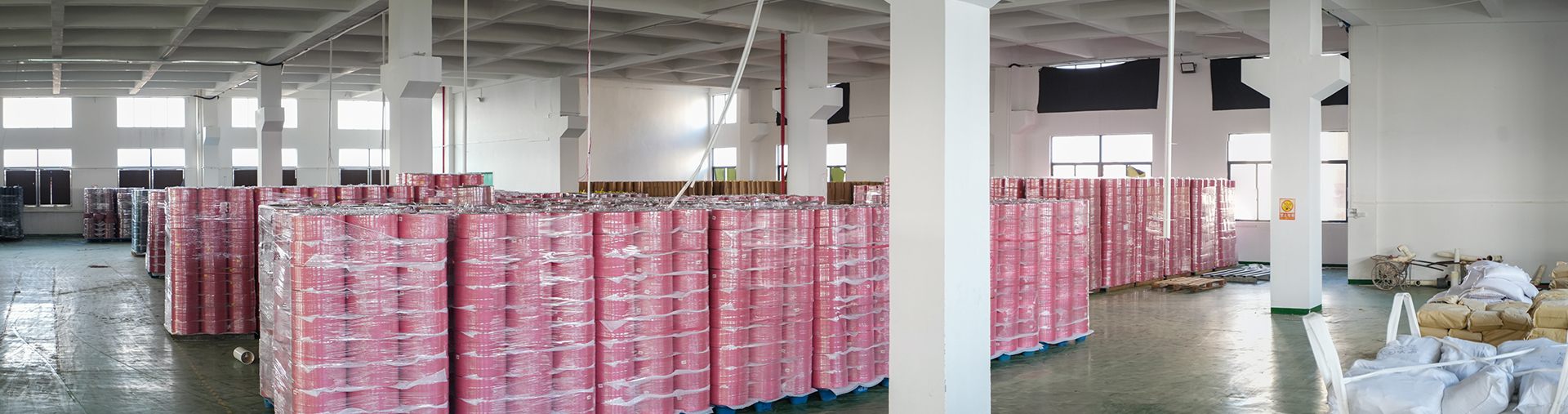
Loose PET Strapping Band? 4 Causes & Practical Fixes
2026-10-02PET strapping band can hold a pallet, pipe bundle, or stack of panels through loading, storage, and transport. When the bundle becomes loose, the cause usually sits in one of four places: the strap specification, PET strap quality, machine capacity, or worn contact parts. Check the whole setup before changing rolls.
Why Does a PET Strapping Band Bundle Become Loose?
A secure package needs a working match between the load, the strap, the baler, and the joint. PET plastic steel strap has good tensile strength, impact resistance, flexibility, and tension retention. Those properties only help when the selected size and the machine setting fit the load.
Check the Load Before You Choose a Roll
Record the bundle weight, width, height, and edge shape. A strap that works for cartons may not hold a one-tonne steel or stone bundle. Also note whether the load shifts during forklift handling. Movement creates impact force, so the strap needs room for controlled elongation while keeping useful tension.
1 Match the PET Strapping Band Specification to the Load
The first check is simple. Read the width and thickness on the roll, then compare both values with the baler’s permitted range and the load’s tension requirement. Common customizable PET sizes include 1508, 1608, 1609, and 1910. The code alone does not select the right strap. The load and machine must be part of the decision.
Check Width and Thickness
Width and thickness affect breaking tension, handling, and welding area. A thin strap on a heavy bundle can reach its limit during tightening. An oversized strap can also create a poor joint when the machine cannot heat and press it correctly. Run a sample bundle before a full production order, especially after changing material or machine.
Verify Machine Compatibility
The machine must accept the strap dimensions. A pneumatic baler commonly handles 13 to 25 mm strap widths and 0.4 to 1.5 mm thickness. A portable electric baler commonly handles 13 to 16 mm widths and 0.4 to 1.2 mm thickness. Match these ranges to the actual PET strapping band before setting tension.
2 How Does PET Strap Quality Affect Bundle Security?
Low tension can come from the roll itself. PET made with high-quality raw material offers more consistent tensile behavior than a roll with an unstable recycled-material blend. Incoming inspection takes a few minutes and can save a full pallet from rework.
Inspect the Strap Surface and Cross Section
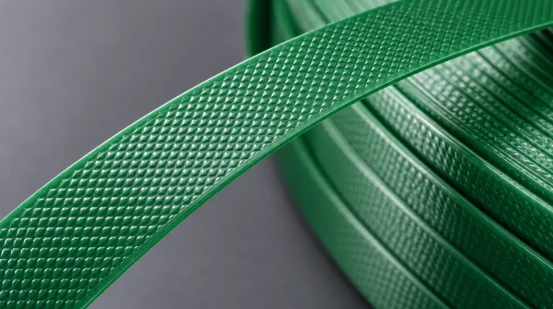
Look for even thickness, clean edges, a smooth surface, and clear double-sided embossing. The embossed pattern helps the tension wheel grip the strap. Frayed edges, dust, uneven thickness, or a brittle section can reduce pull strength and create a loose bundle. Smooth edges also protect the operator’s hands and the packaged goods.
Check Tension Retention and the Joint
PET strapping band is used because it can keep tension during long-distance transport, absorb impact, and resist rust. Test that claim on a representative package. For friction welding, check weld coverage, alignment, and cooling before moving the load. For a strap buckle, keep both layers flat inside the galvanized steel buckle, then crimp the buckle fully with the matching hand tool. A tilted buckle can release tension even when the strap itself is sound.
3 Which Strapping Machine Should You Use?
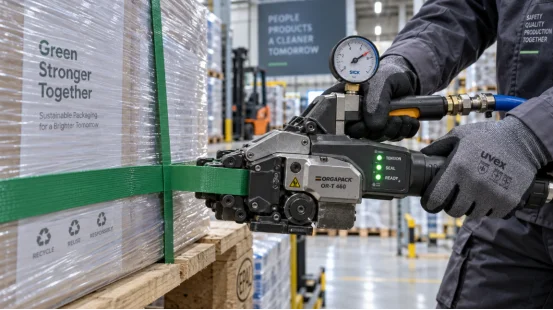
Your baler sets the practical ceiling for strapping machine tension. A manual tool is portable and useful for low-volume work. It tightens the strap with a tensioner and closes the joint with a plier and buckle. Heavy bundles can exceed the pull available from a manual tool, leaving the strap tight at the start and relaxed a few minutes later.
When a Manual Tool Fits
Use a manual strapping machine for light or medium loads, mobile repairs, and short packaging runs. Keep the short strap end fully inside the clamp, pull the long end straight, and rock the lever steadily. The two layers must sit together before you insert and crimp the strap buckle. Small alignment errors matter more than they look.
When to Move to Pneumatic or Electric Equipment
For loads around one tonne or more, a pneumatic strapping machine or electric strapping machine usually gives better control when the required tension exceeds manual capacity. Both equipment types can use PET and PP straps and seal by friction welding. Check the air pressure, battery condition, strap path, and welding temperature before blaming the material.
4 Could Worn Parts Be Causing the Slip?
Tension wheels and grippers work against the strap surface on every cycle. Dust builds up. Teeth lose their profile. Springs weaken. The result is familiar: the tool slips during take-up, the motor sounds normal, and the finished bundle still moves.
Signs of a Worn Tension Wheel or Gripper
Watch for shiny wear spots, intermittent slip, uneven strap marks, or a bundle that relaxes immediately after sealing. Compare a fresh strap roll with the same machine. If both show the same slip, inspect the contact parts first.
Maintenance and Replacement Steps
Remove strap dust, check alignment, and inspect the wheel and gripper teeth. Replace worn parts before the next batch. Then run a pull test and a short handling simulation. The test does not need a laboratory. A controlled forklift move can reveal a weak joint quickly.
A Five Minute Loose Bundle Troubleshooting Sequence
-
Weigh the bundle and record its dimensions.
-
Read the PET strapping band width, thickness, and batch information.
-
Compare the roll with the machine range and strapping machine tension setting.
-
Inspect the friction welding joint or strap buckle for alignment and closure.
-
Clean and test the tension wheel and gripper, replace worn parts, and repeat the sample test.
How Can Weide Chuangyi Packaging Help You Match the Setup?
The right PET strapping band has to match the strap size, joint method, baler, and actual load. Weide Chuangyi Packaging supplies PET straps in green and black, with customizable sizes and equipment matching for pneumatic and electric balers.
The product range focuses on smooth edges, double-sided embossing, bending resistance, moisture resistance, and stable use across weather changes. Those details connect directly to the problems covered here. You can review the PET strap series and send the load weight, bundle size, target strap dimensions, and baler type for a more practical selection.
FAQ
Q1: What is the first thing to check when a PET strapping band becomes loose?
A: Check the strap width and thickness against the load and the machine range, then inspect the joint.
Q2: Can a manual strapping machine secure a one tonne load?
A: It may work for some loads, but a pneumatic strapping machine or electric strapping machine is usually a better fit when the required tension exceeds manual capacity.
Q3: Why does a friction welding joint open after transport?
A: Check strap alignment, welding coverage, cooling time, and machine temperature. Worn tension parts can also reduce the pressure before welding.
Q4: When should you replace the tension wheel or gripper?
A: Replace the part when you see worn teeth, repeated slip, uneven strap marks, or immediate tension loss after tightening.
Q5: Does PET strapping band keep tension during long-distance transport?
A: PET strap has useful tension retention and impact resistance. Confirm performance with a sample package and a handling test that matches your route.
