

PET Strapping Lifespan & Storage: How Long Does It Last?
2026-09-04A roll of PET strapping can sit in a warehouse for months. It might still look brand new. This sparks a highly practical question. How long does PET strapping actually last?
No single number covers every roll. A PET strapping lifespan depends on several things. Raw material quality, storage methods, and sunlight matter heavily. Heat, harsh chemicals, and physical damage play a huge role too. Your specific load also counts. Good PET offers massive tensile strength and incredible toughness. It holds tension well while resisting moisture and rust. Yet, sloppy handling easily shortens its useful life.
You might use a PET strapping belt for heavy industrial packaging. If so, checking its true condition is crucial. It matters just as much as picking the proper width or thickness.
Does PET Strapping Degrade over Time?
Yes. PET strapping aging definitely happens, even though polyester is famously tough. This aging usually brings obvious brittleness or cracking. Weird discoloration, weaker tensile performance, and bad sealing results are common signs.
Importantly, PET strapping shelf life isn’t merely the elapsed time since production. Two identical-aged rolls behave totally differently. One might stay safely indoors. The other perhaps sat near an exposed loading bay.
Aging Is Closely Linked to Exposure
PET is a polymer. Lengthy exposure to harsh sun, intense heat, or bad chemicals hurts it. Repeated physical damage also ruins its core structure. This fully explains why PET strapping turns brittle in awful storage.
Overall quality heavily matters too. Prime raw material yields better texture and tensile performance than inconsistent recycled stuff. Uniform thickness and perfectly smooth edges are great indicators. A clean surface is another helpful sign during quick inspections.
What Causes PET Strapping Aging?
Several factors can shorten a polyester strapping lifespan. Most are not dramatic events. They are ordinary warehouse problems that build up over time.
Sunlight and UV Exposure
Long periods in direct sunlight should be avoided. PET strapping UV exposure can speed up surface deterioration, especially when rolls are stored outdoors without cover.
A shaded indoor rack is a much better place than an open yard. It sounds obvious, but temporary outdoor storage has a habit of becoming permanent.
Heat, Moisture, and Weather
PET strapping has useful weather and moisture resistance. Product information also describes good stability across a broad temperature range. That does not make uncontrolled outdoor storage a good practice.
Rain, heat, sunlight, dirt, and repeated temperature changes often occur together. Over months, that combination is more demanding than normal indoor PET strapping storage.
Chemicals and Surface Contamination
Keep PET away from acids, alkalis, paint, oils, and other industrial chemicals. Chemical contact may affect the strap surface or speed up deterioration.
A clean strap also feeds more reliably through equipment. Dirt and contamination are easy to overlook until a machine begins giving inconsistent results.
Cuts, Scratches, and Crushing
A small edge cut can become a weak point once the strap is tensioned. Rough pallets, sharp metal edges, dragging rolls on the floor, and placing heavy goods on coils can all cause damage.
For loads with sharp corners, suitable corner protectors can reduce concentrated pressure on the strap and protect the packaged product as well.
How Should You Store PET Strapping?
If you want to know how to store PET strapping, start with a simple rule: keep it clean, dry, shaded, and free from unnecessary pressure. Good PET strapping storage conditions are not complicated, but consistency matters.
Keep Rolls Indoors When Possible
Store rolls in a cool, dry, ventilated area away from direct sunlight and strong heat sources. Do not place heavy products on top of coils or leave rolls where forklifts can crush their edges.
Protect the Strap during Handling
Do not drag the roll across a rough floor. Avoid cutting or scraping the strap before tensioning. When the package has a sharp corner, add edge protection rather than relying on extra tension.
This is one of the simplest answers to how to extend PET strapping life. A stronger pull cannot repair a damaged strap.
What Are the Signs of Aging PET Strapping?
The signs of aging PET strapping are often visible before a serious failure happens. You should check old stock before using it on valuable or heavy loads.
Check Color, Surface, and Edges
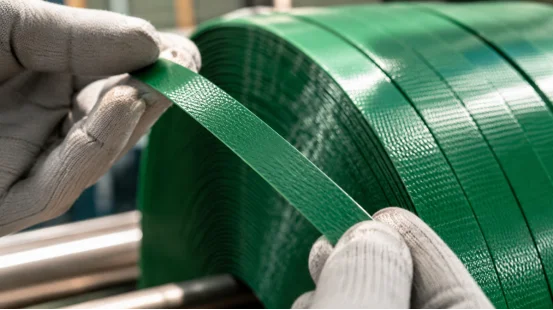
Look for unusual yellowing, cracks, spots, rough edges, or obvious deformation. Good strapping should have a relatively uniform surface and consistent thickness.
PET strapping commonly uses an embossed surface. Clear, even embossing helps create useful contact with the load, while smooth edges make handling safer.
Check Flexibility
Bend a short sample several times. Good PET should show toughness rather than breaking immediately. A strap that cracks, turns unusually white at the bend, or feels noticeably brittle deserves further testing.
Check Tensile and Sealing Performance
Appearance alone is not enough. PET strap tensile strength is a key quality measure, especially for heavy loads. Different widths and thicknesses carry different breaking-force ratings.
Also check the welded joint. PET offers good welding performance, but worn equipment, incorrect settings, contamination, or aged material can all affect the final seal.
How Do You Choose PET Strapping for Long-Term Load Security?
A long PET strapping lifespan means little if the original strap specification is wrong for the job. You need to match the strap to the load, package edges, transport conditions, and equipment.
Match Strength to the Load
Current industrial PET sizes can range from narrow 9 mm straps to 32 mm material, with breaking force changing significantly by specification. Common formats also include sizes such as 1608, 1609, and 1910.
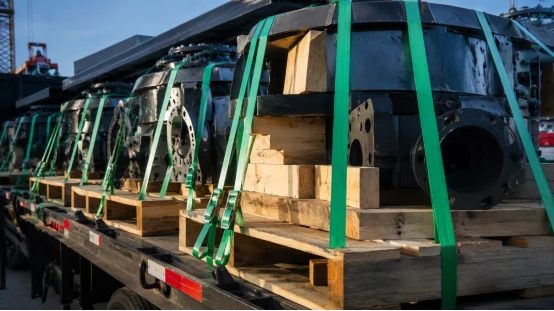
For heavy duty PET strapping, focus on required breaking force rather than choosing by thickness alone. A 16 mm strap used on one pallet may face a very different load from a 19 mm strap securing metal products.
Match the Strap to Your Equipment
PET can be used with electric and pneumatic tools. The strap width and thickness must fit the machine’s working range. Suitable strapping machines can tension, weld, and cut PET during packing.
For PET strapping for pallets, also consider movement during transport. PET has good tension retention and impact resistance, which helps when loads experience vibration or repeated handling.
Why Does Consistent Product Control Matter to Service Life?
Storage cannot compensate for inconsistent material or the wrong specification. When comparing industrial PET strapping, check raw material, dimensional consistency, edge quality, toughness, tensile performance, and machine compatibility before price alone.
Weide Chuangyi Packaging supplies PET and PP strapping alongside strapping equipment and packaging accessories. Its PET range covers multiple widths, thicknesses, and breaking-force levels, while customization is available for dimensions, roll weight, color, and related requirements. PET products use embossed surfaces and are intended for industrial bundling and load securing.
This combination matters when how to inspect PET strapping becomes part of routine purchasing. You can compare the strap, equipment, load profile, and edge protection as one packaging system rather than treating the PET packing strap as an isolated item.
FAQ
Q1: How long does PET strapping last?
A: There is no universal service-life figure. The actual PET strapping lifespan depends on material quality, sunlight, temperature, chemical exposure, handling, storage, and the required load performance.
Q2: Does PET strapping degrade over time?
A: Yes. Harsh conditions or rough handling cause real wear. The material might turn brittle or crack. It can also fade and lose holding power.
Q3: What is the PET strapping shelf life?
A: You cannot judge PET strapping shelf life merely by age. Good storage matters heavily. A well-kept roll survives much longer. Conversely, rolls left in harsh sun, intense heat, or chemicals ruin quickly.
Q4: How can you tell whether old PET strapping is still usable?
A: Look at the color and surface. Feel the edges and test its flexibility. You must also check the seal and PET strap tensile strength. For tough jobs, do not just eyeball it. Actual performance testing works best.
Q5: Is heavy duty PET strapping suitable for long-distance transport?
A: Yes, heavy duty PET strapping handles long trips perfectly. It holds tension tightly and resists moisture. Just ensure your chosen specs fit the exact load weight and travel environment. Finally, match it to your machinery.
